

THE DETAILS ABOVE THE SHADE
A cohesive finish starts with the right rod configuration.
Choosing Antique Brass brings warmth and a softly aged look to your pendant. Before we finalize your hardware, we may contact you about your hanging height. That small detail helps us plan both the length of your rods and how consistently their finish comes together.
This guide applies to any of our fixtures that uses Antique Brass rods. It explains what can vary, why we prefer matching-length sections when possible, and how to estimate the right drop. Always subtract the shade height indicated on the product listing for your exact fixture and selected size.
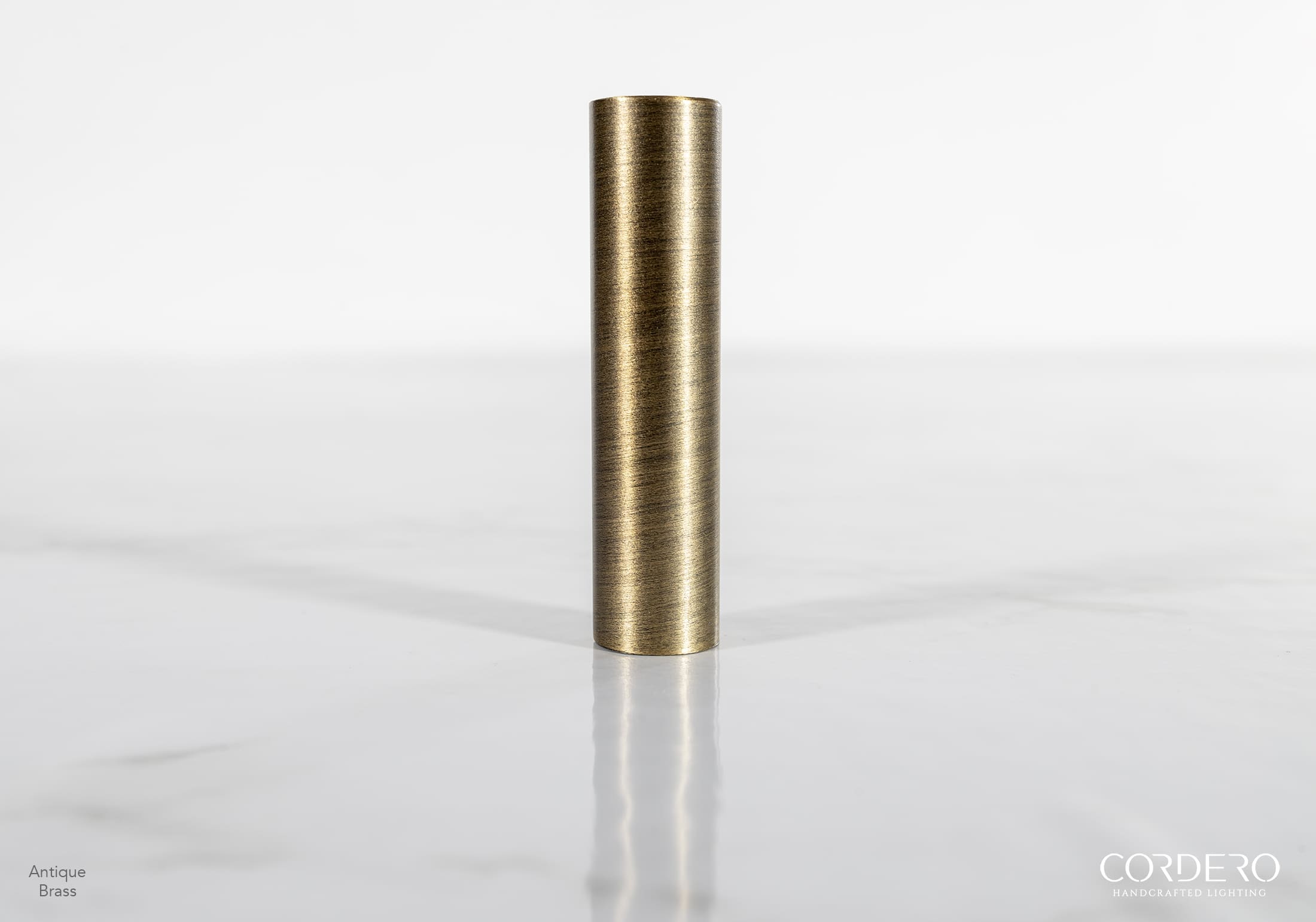
Our Antique Brass hardware sample shows the finish up close. A sample is a visual reference; individual pieces may vary.
Why can Antique Brass rods vary?
We occasionally see slight differences in color and tone between rod sections of different lengths from our supplier. We believe this may be because the different lengths are finished in separate production batches.
Our standard pendant configuration includes up to 36″ of rod, traditionally supplied as two 12″ sections and two 6″ sections. For Antique Brass, we prefer to use matching-length sections whenever possible to help create a more consistent appearance along the rod assembly.
Using the same section length can help reduce visible differences, but it does not guarantee an exact color match.
Five ways to build your rod length
You do not have to use the full 36″. These configurations use one section length throughout each assembly.

| Total rod length | Matching-length sections |
|---|---|
| 36″ | Three 12″ sections |
| 32″ | Four 8″ sections |
| 28″ | Four 7″ sections |
| 24″ | Two 12″ sections |
| 21″ | Three 7″ sections |
These totals describe the rods only. The canopy, connecting hardware and shade add to the fixture’s overall drop. If your ideal length is not shown, contact us so we can review your setup.

Antique Brass canopy and rod hardware, shown in our product photography.
Remember the canopy and connecting hardware
Using our concrete-fixture canopy as the reference, allow approximately 2″ of vertical height for the canopy and connecting hardware combined.
This allowance belongs in your hanging-height calculation alongside the rod length and shade height. It is not the canopy’s diameter. The concrete-fixture canopy is our example; if your selected fixture uses different canopy or connecting hardware, confirm its vertical allowance with our team.
Find your ideal hanging height
For a pendant over a kitchen island, a common starting point is to position the bottom of the shade approximately 36″ above the countertop. Adjust for your room, sightlines and preferred look.
Measure everything in inches, then use:
Ceiling height − countertop height − desired clearance − shade height from your product listing − canopy/hardware allowance = approximate rod length
Measure ceiling height and countertop height from the floor. Measure clearance from the countertop to the bottom of the shade. Use the shade height listed for your fixture and size—not the shade diameter or overall fixture height. Our example below uses approximately 2″ for the canopy and connecting hardware.

A real-world example
With a 108″ ceiling, a 36″ countertop and a 20″ Kopernican shade that is 5″ tall, a 36″ clearance calls for approximately 29″ of rod.
The 28″ configuration (four 7″ sections) would place the shade about 37″ above the counter with those same measurements.
For comparison, the 20″ Galilean Concrete Dome is 10″ tall. With the same 108″ ceiling, 36″ countertop, 36″ clearance and approximately 2″ hardware allowance, it calls for 24″ of rod—two 12″ sections. This is why using your fixture’s listed shade height matters.
Use the shade height on your product listing
The Kopernican and Galilean Concrete Pendants below are two examples. The guidance applies to any fixture using Antique Brass rods. For another style, material or size, subtract the shade height indicated on that specific listing. The same diameter can have a different shade height in another design.
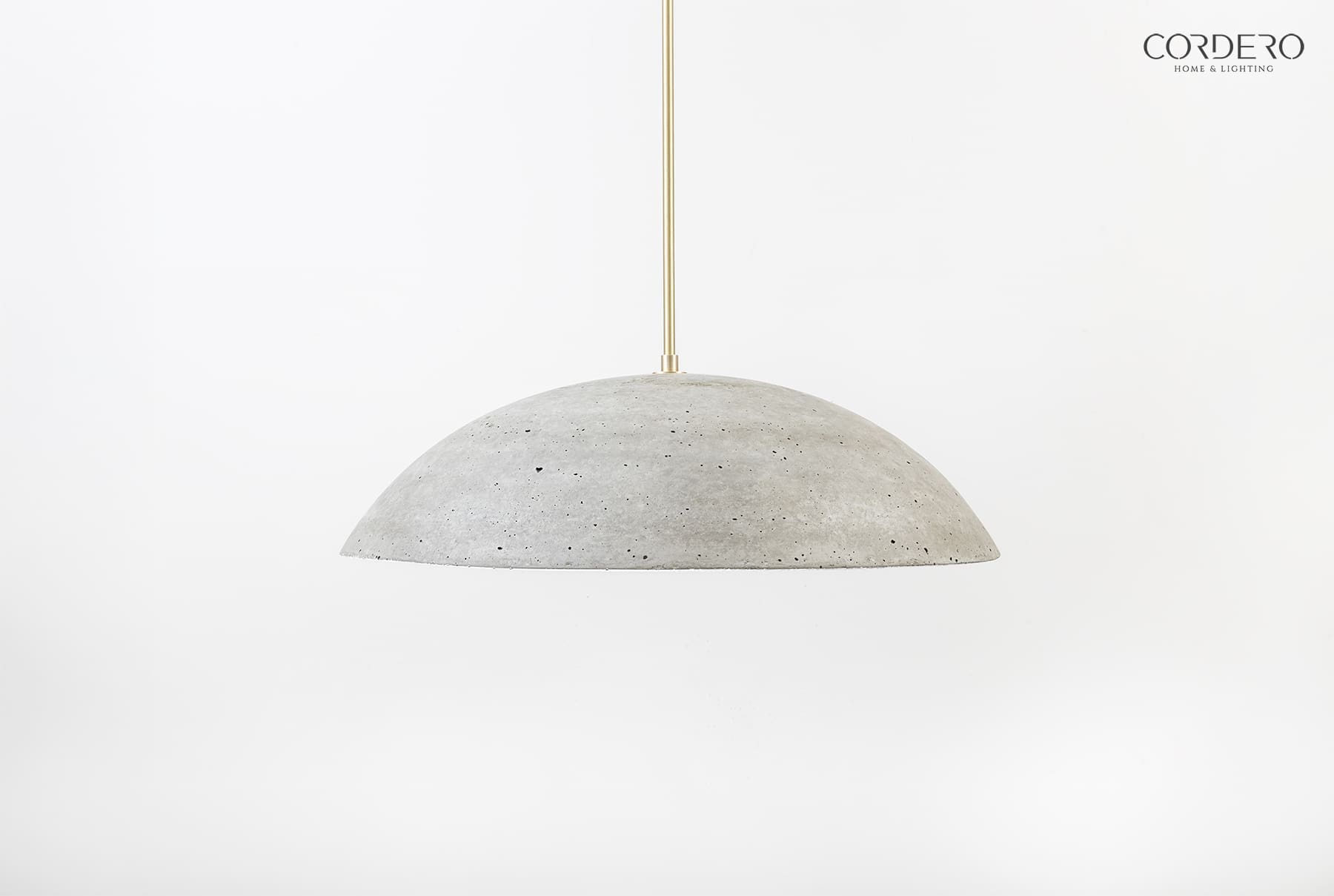
Kopernican Concrete Pendant
| Shade diameter | Shade height to subtract |
|---|---|
| 18″ | 4.75″ |
| 20″ | 5.00″ |
| 24″ | 6.75″ |
| 28″ | 7.75″ |

Galilean Concrete Dome Pendant
| Shade diameter | Shade height to subtract |
|---|---|
| 16″ | 8″ |
| 18″ | 9″ |
| 20″ | 10″ |
| 22″ | 11″ |
| 24″ | 12″ |
Dimensions above are from the linked concrete-fixture listings. Check the current listing for your selected fixture and size, or contact us if its shade height is unclear.
Let’s work out the details together.
Send us your ceiling height, countertop height, selected fixture and size, and preferred clearance. If you have already ordered, include your order number or reply to our hardware confirmation email.
Our team in Charlotte, NC will help identify a rod configuration that balances your hanging height with a cohesive Antique Brass appearance.